Episode Transcript
[00:00:00] Speaker A: Particularly when you've gone from going in this direction for so long, you can't necessarily go whoop. Then go the direction like straight away. Just like a car, if it's going 100 miles an hour in one direction, you got to go backwards 100 miles an hour because you've got to like slow down, turn direction, all this kind of thing. So it's a process and you've got to also let go of other beliefs as well. So you've got to unlearn certain things, which is. It's not an easy thing.
And so anyway, I started coming to the belief that this could be, this could be true. Not sure if it is true, but it could be. Now. What was ridiculous is now at least possible. There's God, the idea of God. And when your character is so built into your worldview of atheism, you've been known as the guy on campus or in school, like he was ridiculing these people. They go from that to then being one of them is quite challenging. So I had to really like humble myself, I guess, to, to these things.
[00:01:08] Speaker B: Hello and welcome to X Skeptic, where we hear unlikely stories of belief. I'm your host, Jana Harmon. This is a place for people who take questions seriously, who believe that curiosity matters, the doubt deserves respect, and that changing your mind isn't weakness, but rather intellectual and personal courage.
Each episode features someone who once identified as a skeptic, agnostic or atheist, and who followed their questions wherever they led, even when the answers were uncomfortable.
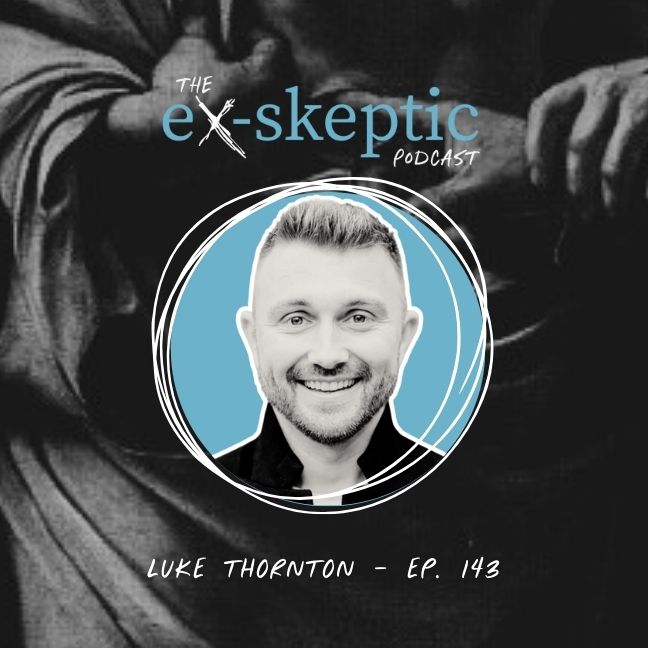
Today you'll hear from Luke Thornton, a UK based creative entrepreneur who grew up in a deeply secular culture and came to identify as an atheist not because he was close minded, but because he cared about truth.
Luke asked hard questions about science, morality, free will and meaning. And when the implications of atheism became clear, he was willing to live with them until an argument he couldn't dismiss forced him to reconsider everything.
What follows is not a story of pressure or persuasion, but of patient inquiry, of conversations, challenges, and one key moment when what once seemed impossible became plausible and Luke's curiosity turned into genuine openness. If you're new to X Skeptic, you can explore our 11 curated YouTube playlists and our conversational AI tool at xskeptic.org designed to help you find stories and resources based on the exact questions you're asking.
Now let's get into Luke's story.
Welcome to X Skeptic. Luke, it's so great to have you with me today.
[00:02:47] Speaker A: Hello, thanks for having me. It's Great to, Great to be here.
[00:02:51] Speaker B: Terrific. As we're getting started, I'd love for our listeners to know a bit about who you are, where you live, the kind of work that you do, things you're passionate about these days.
[00:03:02] Speaker A: Yeah, yeah. Thanks Janice. So, yeah. Hey guys. So my name's Luke. I'm from England, the uk. I'm currently living in London. Originally I was raised in Yorkshire which is the. The north of England. And Yeah, for about 10 years now I've been running a marketing business, a creative marketing agency which specializes like film, photography, social media, graphics, things like that with all kinds of companies and charities and churches and everything else like that. And yeah, I love lots of things, really quite passionate about business and doing things well for the glory of God and apologetics, philosophy and yeah, more currently looking into the Bible as well and the whole the ark and the story and all that kind of thing related to the Bible. As an ex skeptic, it's something that growing up wasn't a big part of my life. So that's something I'm looking at at the moment. And yeah. And otherwise I guess it was exciting to be here really. So I don't want to go too much into everything else, but yeah, that's a loose summary of me if you like.
[00:04:05] Speaker B: Wonderful, wonderful. Well, let's, let's get into your growing up years there in Yorkshire.
Give us an idea of what life looked like for you as a child. Growing up in your family, your home, whether there was religion or church or, you know, you're studying the Bible now. Was there Bible in your home? What did that all look like?
[00:04:26] Speaker A: Yeah, great question. So growing up, I grew up in a non Christian household, so family on both sides, not particularly religious or having a living faith or anything like that. And even the question of, you know, having like a relationship with God is not really something that I would probably have ever heard, to be honest, in conversation, whether that's in family life or at school or something like that. The UK or England, Yorkshire specifically, where I grew up, it is and was very secular. So in terms of when you go to school you might have a few like hymns or something like that, which is probably less of a thing now I guess in many schools here.
And yeah, there was not really God wasn't really in conversation very often.
And yeah, to be honest, it was something where even in like class, for example, where there's about 30 children, there was maybe a handful of people I would know who were would maybe describe themselves as Christian and that would probably just Be for like the census kind of basis rather than going to church or something like that. And yeah, so mom and dad don't really have you know, like, like a faith if you like they're kind of like open to it perhaps in some ways, but not really. Kind of like, you know, you can believe what you want to believe as long as it's not, you know, impacting us too much. It's all good. Kind of like open to things but not really landing anywhere particularly kind of quite.
Yeah, so that's kind of as much as I'd say with those guys. Kind of left me to my own devices ultimately out of my family's. Maybe a couple of anti zung and aunties and uncles who went to church. But I didn't really see them that often. So in terms of actual conversations and meeting points for that, for those conversations didn't happen that often. And however when I did meet them it was interesting because I used to see, see them as a bit strange because I was like why do they believe in this like God thing? I don't really get it. Very peculiar. And yeah, so because particularly when you're growing up in terms of the backdrop that we have in our life when you go to school, no one believes in God in class. God is never mentioned now in religious studies it's just an option of many. So there's like oh well you know, Ricky Gervais for example, who's a famous comedian. I'm guessing many of your listeners who know he is. He was always ridiculing God and the idea of God and that he just believes in one less God than everybody else. And I kind of like went along with that because I was like well it's just a numbers game. And without looking into the actual evidence and the claims of of all these different faiths and religions it's a. Yeah, it's kind of just doesn't make sense at the time anyway. And particularly when the science and the, the advances science has been making over so so long.
It just seems like over time God will just. God just keeps getting smaller and smaller. The whole like God of the gaps argument.
[00:07:36] Speaker B: Right.
[00:07:36] Speaker A: And it kind of made a lot of sense particularly when you teachers are affirming that point of view as well where they're not really look, you know giving credible or credence to people of faith and all this rest of kind of thing. It's interesting, I mean even like you know now you know when there's many scientists and science itself in fact was brought about by you Know, clergy and people who were of the faith and there are many Christian scientists of great ones of the past and of the present. And that, that was never discussed. It was just kind of assumed that, you know, these people don't believe in God and it's a bit silly just when you're like picking certain things up, you know, when you're speaking to people.
It was just something which was more, if it was anything, it was just more just those, those apathy towards God, I guess, or the conversation of God. And it was very rare that came into people. It came into, yeah, contact with people. When that came up in a positive light, it was more people want to go to heaven and they do and then they're afraid of dying and then therefore, oh yeah, I believe in God because of that. And that was kind of it really. And I was, I was asking like, oh, have you read the Bible or have you read this? I've read that and most pretty much every time it was, oh no, I've not, I've not done that. No, I do goods. Church or mosque or synagogue, whatever. No, not really so very much. That was kind of my experience growing up as a, as a young person and yeah, and then we'll come on to some things later in terms of when I did start to meet other Christians, actual real, you know, church believing Christians with the living faith. That, that was definitely a part of my conversion, I guess in terms of that, that, that witness of people. But yeah, particularly growing up, there was, there's none of that really, to be honest.
[00:09:28] Speaker B: Was it anything that, that piqued any curiosity in you at all or is it just. Nah, it's super.
[00:09:35] Speaker A: It was super interesting to me because I was. If this is true, I want to know.
In our, in religious studies, for example, I was always the student who was like putting his hand up, asking more questions. And interestingly the, at secondary school the teacher was a priest, so his ministry was in the school now, the way I see it now. And so we, we used to have conversations for like, you know, 30 minutes after class. YouTube, like literally like really going really like close to the next lesson. I'm like, I've got like 10 seconds left. I'm not really going for it. And so it was always something that animated me in terms of that, the topic. However, I just, I couldn't make the leap to believing in God again because, you know, with, with science having all these like points, if you like, of like send people to the moon, the Internet, all these other things and then God like irrelevant Almost, it's like, well, you know, because if you, if you're putting everything in the same basket kind of thing, you know, all these religions knew and was ever talking to me, at least that I remember, about the resurrection and the, the evidence for this and, and all these other things and.
Yeah, whether it was something where people didn't say it or I wasn't listening or a combination of the two, it's hard to, to know looking back. But yeah, yeah, it was definitely something super interesting for me because if it was true, that changed everything. So I wanted to know that, but I just wasn't entertaining the idea of that because this seems so ridiculous. It's like, if God's real, then why can't I see God?
[00:11:10] Speaker B: During this, this period of time, you were growing up and you were curious how, but you were listening to the sciences and thinking religion may be a little bit ridiculous and you were curious enough to have some meaningful questions.
Would you have considered yourself an agnostic, an atheist? Did you claim an identity around your beliefs at that time?
[00:11:38] Speaker A: So I would probably describe myself as a very strong agnostic, if not atheist, sir. But although I think the, you know, in terms of the definition of atheist is a positive belief that God doesn't exist, so I would have gone along with that. Really? Yes, I'd say, I'd say this, that I believed God didn't exist or lived. Yeah, not that I know God didn't exist, but I believe God does not exist. That would be my position and if it wasn't that, it would be, yeah, I'm so I'm pretty much certain, but I'm like nine out of ten that God doesn't exist, but I'm not 100% because no one can claim 100% certainty. So yeah, I think I would have probably said atheist, to be honest.
[00:12:18] Speaker B: I'd like to pause for a moment and ask you a question.
Have you been looking for a way to go deeper in your faith?
I've had the opportunity to see up close how the Fellows program from the C.S. lewis Institute Shapes people's lives. It's not just about gaining knowledge. It's about seeing how the pieces of the Christian faith and worldview began to come together in a way that's coherent, true, and deeply personal.
This is a year long discipleship experience centered on spiritual formation and apologetics. Each month includes guided scriptural study, along with readings and resources that help you think more clearly about what you believe.
Fellows gather monthly for large group teaching and also meet in a small group discussion where honest Questions and thoughtful conversations are welcomed. You'll also have a monthly one on one meeting with a mentor who offers guidance and encouragement along the way.
Many describe this experience as quietly transformative, reshaping not only what they believe, but how they live.
A new Fellows program begins this June and applications are open now. Visit cslewisinstitute.org to learn more.
Now back to our story.
If you don't believe that God exists or the supernatural exists, did you really think about what it meant to that nature was all there was and what that meant for your life?
[00:13:44] Speaker A: So this was a like an evolving worldview that, that happened to me essentially. At first it was just God doesn't exist and it was kind of like that's kind of it really. But then suddenly you met with these consequences, I guess. Or yeah, the consequences are other beliefs which kind of, you know it to be intellectually honest and congruent then you have to kind of adopt really. So for example, is objective morality real now that I kind of wanted it to be, yes.
But I couldn't ground that anything because I was like, well, if we're just mattering motion and we're just a result of prior events, then therefore we can't have actual morality. I can, I can sense as though I have morality and that I, I mean I may see something and that is wrong, but I can't actually say it is wrong because there's not, there's no lawgiver, it's just my perception. And then people like famous atheists would talk about well there's this, you know, this, this Sam Harris for example would, would say who's one of the, part of the new atheist movement from years ago who talk about the moral landscape and like this is for human flourishing and this isn't that. But then over time people started to realize, well if, that if. What about this person who has different perspective and all these other things above their idea is, is this. But your idea is that then who wins basically, which is true. And if you have nothing to appeal to an objective law, then it's just basically who has the most power kind of wins in the end. And yes, that was kind of, I said, I basically, well okay, morality doesn't exist then. So that's this ultimately how I would live my life like that I would live it in such a way where I believed it's true, at least from like a utility perspective. However, yeah, if you was really drill down then unfortunately not free will is another one. So free will do we have, can we have free will if we're just these, these animated atoms? No, I don't believe so because how, how can we. I'm just doing this now because of what happened moments ago. Then if you rewind, you know, back further far enough to the Big Bang, it would all happen exactly the same. So kind of like determinism. So that wasn't great. And then, yeah, like light, life after death. Well, obviously I can't believe in that. It's just basically I be the same after death as I was before was alive, which is nothing. So, yeah, there's, there's others. So yeah, there's. There's this big price tag associated with being an atheist or someone who doesn't believe in the supernatural, God.
And yeah, so that was quite a heavy, heavy price to pay. However, I didn't, I couldn't delude myself and like, oh, well, you know, I'm going to heaven after this, or there's this or there's that because I can't wanted to be honest with myself.
And yeah, so I think ultimately, yeah, there is a price to pay. However, what I search for is the truth. So it's not, it's not what I feel like necessarily. Even though again, it could provide comfort. But if it's all a lie, then I could. That I just can't. I can't take myself there, unfortunately.
So, yeah, it was one of those things where it's like I need to relentlessly follow the truth and wherever that takes me.
[00:17:22] Speaker B: Yeah. You know, it's interesting how sometimes I believe that the atheist finds himself in between a rock and a hard place because they'll look at religion and say, I can't believe that even, you know, it might provide some comforting answers. It's wishful thinking, but yet in their own worldview, they have to live with certain illusions or what they call useful fictions. I live as if I have free will. I live as if love is a real thing. I live as if, you know, there are real rights and wrongs, but yet in some ways that, that's a, that's an illusion as well. Or, you know, and someone might call the one who doesn't believe in God deluded, you know, so, you know, or even themselves. It's like, okay, we're looking for truth. And I get that very strongly from you. You're looking for truth.
You're in a worldview that provides a limited view of reality and even in explaining your own human experience.
[00:18:24] Speaker A: So it was also just to quickly finish. Yes, it was. Something else came to mind. The. It was also Quite like demotivating as well. Because I was thinking, oh, if I can do this, I can do this, I can do this, I can do this. But even if I become like the most a good like human being philanthropist that saves the world, even if, take it to the extreme, it doesn't matter because once I die, it all equals nothing. So I was like, even if I do that, it doesn't really matter. I could be this horrible, you know, like criminal and do loads of bad things or loads of good and do these good things, but in the end it all equals zero. So kind of what's the point? And then I was thinking like, what is the point? And then it was just basically, well, the best thing we've got, I guess is probably like relationships, I guess in terms of like with, with friends and part partners and, you know, intimate relationships and things. And that's kind of like the best we've got. And so that, yeah, that's kind of where I landed on that.
But then it, but even Z, it was like, just enjoy, enjoy this fleeting experience while it lasts because then it will just end. And that's kind of it. So it's kind of one of those things where it was kind of, yeah, a bit, bit sad. But also I don't think you can actually live in that state very long. And if you can, it's not, it's not going to end well, I guess. But yeah, it's kind of one of those things where I had to be like, wow, in, in certain moments I can, I can remember, there's one point in time when that happened and I kind of had that realization. Not just like intellectual, but really like deeply accepted it. And I was like, man, this sucks. And, and then from there it really hit me. And that lasted for probably a little bit of time, but then, you know, I just got on with things and then eventually it kind of dissipated. But. But yeah, that definitely left a mark on me at the time because I was like, man, what is the point?
[00:20:24] Speaker B: What happened in your case? So you were, you were. That was your perspective, that was your sobered moment.
You got it, you understood what atheism meant.
But you're a truth seeker, so how did you. Or what was turning the turning point for you or how did you find your way out of this place?
[00:20:49] Speaker A: Yeah, that's a really interesting question. So after doing this for a few years and really getting to the end of it, I've watched all the content. I've read many books about atheism and this and this and this. And I kind of got a bit bored of it, to be honest. You know what? There's nothing new. I'm just. It's just. It is what it is. And then I've kind of accept. I kind of accepted that and according to some animated conversations every now and then and yeah, definitely kind of like always probing people of faith, like, why do you believe this? Why do you believe that? But there's nothing. Never on anything satisfactory, I guess. And after doing it for so time, it was just one of those things where there was just. I was just fatigued with it, to be honest. It was like, you know what, let's get, let's get on with life and then we'll just, we'll move on to. After a period of years of doing that, there was just this time of just me just like moving through life ultimately looking into more.
Looking and being like a student of like personal development ultimately. Like, how can I become more in terms of like growing as a, as a human being? I guess was, was what I was doing a lot of, and spending a lot of my time and money into this kind of thing, which, you know, I still find that great now, but now it's becoming more like Jesus, who is the ultimate role model. So really it was kind of like. It was like I was doing it in some way, but because even like now the way I see it's all past development is. Is basically becoming more like Jesus. So basically the personal field is just stealing from. From God basically. Anyway, that's the way I see it now. But obviously at the time I didn't see it that way. And yeah, so after a few years of us not really getting too involved in that because again, it can be quite fatiguing to even get in the conversation sometimes with so much energy involved with going down that. Because it can be quite controversial and challenging for some people.
[00:22:45] Speaker B: Are you, are you talking about conversations with Christians or religious people?
[00:22:49] Speaker A: Anybody, Anybody, Anybody who would be up for doing it.
Christians. It could be like New Age people or okay, anybody that would be up for it, which happened every now and then, which could last for hours. And even atheists and whatever, you get conversation with them, but then you disagree about all the different things like morality and free will and stuff like that, which was pretty wild. But anyway, and after a few years doing that and just like leaving it, get on with my life, then I started to just get interested in the topic once again. But for some reason or other I came across, I think it was like a, like a podcast online on YouTube like a few, a couple of our conversations around the idea of faith. And then as I get back into it, because there's new people on the scene, there's some new things to think about, perhaps that I was all right or maybe there's something else. And I kind of, yeah, I kind of, if you asked me, yeah, this will probably last a little bit, but you know, I might as well, it's entertainment. So got nothing else to do at the time. So I was like, yeah, why not? A couple of hours every now and then is fine. And anyway, I was watching various debates between Christians and non Christians and this is something which probably helped form my view as well. So when the new atheists came out years ago, so Richard Hawkins, the late Christopher Hitchens, Daniel Dennett as well, all these kind of guys, they were essentially going out and debating people of faith. But they weren't presenting, since presenting good arguments, they're more like picking holes in people and then before they could answer, they move on to the next thing and the next thing. And so it was just like a, it might seem as a victory to them, but it really wasn't. Although for the time I was looking at it from like a, like a fighting point of view. So it was more like who's gonna win that? Rather than the arguments as such. Anyway, so after seeing many of those and so on, but then suddenly I came across another one and this was a, was Sam Harris versus William Lane Craig. And I was like, ah, interesting. And it seemed to be going in this obviously from my perspective I was kind of on the side, if you like, of the non believer, the atheist Sam Harris. I'll say he's a smart guy, he knows what he's doing even though he's not trained in. Well, I think he did a philosophy degree but is nowhere near, anywhere near William, William Craig's like level. And at the time I didn't really know that because I didn't know who this Christian like dude was.
And but then after watching it, I think it was like a maybe a couple hour long debate conversation.
I was like, this, this Christian guy's got some really interesting points. I was like, I can't really just like let that just go because he's holding his own and he's also like revealing some weak points and flaws in this other guy's arguments. And I was like, wait a minute, how is this, how is this possible? How have I not heard this before?
And, and then it comes on later in, in the debate where Dr. Craig talks about, well, it's not often you find one of these slam dunks but here we have it. And then he basically reveals his points and then he basically says essentially his new escape for Sam Harris on these particular points. And I was like man, that is, that is really interesting. So I couldn't, let's let that go. So I said after that I started looking into some of his points around the moral landscape and the weakness of his position and that that led to his work on the Kalam cosmological argument. And that really for me that was, that was massive because if you can't even get to the point of God because the universe is sir complex like just how to understand the beginning of time, all these other things, there's so many things tied up in that where I was like well nobody knows so therefore I can't even approach it because I've looked into that. However, when yeah this is moving on slightly from that to then the Kalam cosmological argument and after realizing certain things like there can't be an infinite past because if that was the case how would re arrive at today? Therefore there must be a finite point in the past in which space and time came into existence. We can have a future eternity by successive addition. That's fine, that works with 1, 2, 3, 4, all the way he goes keep going, you don't stop but it turns going backwards.
You can't do that because and here's why and so on and so forth. I was like that makes a lot of sense, that makes a lot of sense. And and then basically it goes on to all the other points, the attributes of God. Like if, if God created this universe he'd have to be outside of time.
All these other, you know, all powerful etc personal etc it basically describes. That doesn't get you to Christianity but it describes the characteristics of God. And I was like that makes. This makes so much sense. And this is, this is over the period of like you know, weeks and months whilst I'm reading books on it, thinking about it because particularly when you've gone from going in this direction for so long, you can't necessarily go whoop and go the direction like straight away. Just like a car if it's going 100 miles an hour in one direction, you got to go backwards 100 miles an hour because you've got to like slow down, turn direction, all this kind of thing. So it's a process and you've got to also let go of other beliefs as well. So you've got to unlearn certain things which is it's not an easy thing. And so anyway I started coming to the belief that this could be, this could be true. Not sure if it is true, but it could be now. Now what was ridiculous is now at least possible. There's God, the idea of God and what's.
When your character is so built into your worldview like atheism, you've been known as the guy on campus or in school like who's ridiculing these people. They go from that to then being one of them is quite challenging. So I had to really like humble myself I guess to these things. And yeah, that really caused the crack in my belief system of atheism.
And then I started and then the, the kalam got me to believing that God exists. I was even asking people like can I just explain something to you? And then I went over the clam cosmological argument. I was like can you reveal any holes in this at all? Because I'm trying to find them and I can't.
[00:29:20] Speaker B: So you came to a place where you accepted. Well, you were, you were not sure you wanted to accept that reality. It sounds like. But do you believe in God?
[00:29:29] Speaker A: Well no.
[00:29:30] Speaker B: Yeah, this is a convincing argument that you know, like you were saying it's like turning a hundred mile per hour car around. It's not easy to change those long held beliefs. So, so but you were, but the, but the wall was breaking down a little bit. It sounds like that you were, if you were seeking after truth that you were going wow. Well this sounds kind of true that there, there may have to be a creator behind the universe. So, so then what happened? You said you started moving towards evidences for the resurrection. Is that.
[00:30:05] Speaker A: Yeah, so I was looking into ultimately I just got to at that point like God makes sense, just a creator. And then from there, I mean I can remember this day, I was, I was like looking at all these different like places of faith if you like, in my area. So I was looking at churches, mosques, synagogues and I was like I'll go to any of these, whichever is which. Whichever is true. Not convenient, but true.
I'll, I'll do. And I was like man, what, what do I do here? Just to go to all of them and do like a studying on them all on them all. Like how do I do this?
And interestingly I suppose this how God works, I guess. But I was in this co. Working space, co worker space basically place where lots people go freelancers, people from companies to work in a, in a shared space.
So you're not Working from home all the time. Great, great idea. I still do that now. And anyway, at this time in this shared working space, I was speaking to lots of people in there, but then one of the people in particular every now and then used to talk about Jesus and drop it into conversation. And I was like, okay, that's interesting. And, and after a while of them doing that, I said, why do I keep talking about Jesus anyway? And this led to some quite long, drawn out conversations about who Jesus is, why, you know, the credibility of him being a real person, what he did, why he came, all these other things.
And after a while of talking to this person about it, thought, you know what, Luke, you've got a lot of questions. How about you come to an Alpha course with me? I was like, what's an Alpha course? And then it's a place to ask the big questions ultimately. And I was like, okay, interesting. I was like, where is it? They go, it's at my church. I said, oh, okay, here we go. This is surfishy. I was like, right, it's like a Christian meat grinder where I've got to go and then I come a Christian at the end or something. I was like, I'm not, not too sure really.
But I thought about it and I was actually, no, you, you're right, I'm asking these questions, so why would I not go somewhere where they're going to talk about these things?
And this is also a credit to them. And also it shows the power of an invitation as well. Invitations are very powerful. And so, yeah, they did the right thing and spirit led, I'm sure as well. And, and it was, I was, it was at the right time, at the right place.
And then. So bear in mind, I've never, I think at this time I had never been to a church of my own volition. You know, I think I might have been to a church as like a tourist or something here and there, or cathedral, if I was in a. In York or something like that, which has a big cathedral. And other than that, no, I've not, not been to a church before to like pray to God or anything like that. And see, I went there and I went to the Alpha course once and I went to, I think I went to two sessions and I was kind of like, I'm kind of done really, I'm not, not too keen on this, but thanks anyway. And so I left that and then I carried on looking into these topics, reading books, watching videos, and I was all these things kept and I was like, I Need to go back. So anyway, the next one started about six months later or something. And bearing in mind I'm running a business at the time, so I'm busy all the time. There's lots going on. Six months is like a very short period of time to me at that point.
And. And then it came up and I was like, right, I'm ready to do this, I'm ready. And. And then after starting there, getting involved, it was my favorite night of the week, to be honest, because I was like, we used to stay there for like a. Watch the. Have food together, watch a film and then have conversations for an hour or two hours, whatever it was going to be. And used to absolutely love it. Get really getting involved, talking to people. And what was great is that the people there were very mixed. Those people who have no faith have different faiths. And of course there are Christians as well who are kind of hosting the event.
And it was really good time to think out my ideas and the things which were in my mind at that point to externally process and also to just like get feedback on certain things. And also just each night had a different topic as well. So it was good to like analyze and figure out those different bits and pieces as well. And of course there's a spiritual element to this in terms of the Holy Spirit and what the Spirit was doing in that place. Well, and in me. And yeah. And after the course of eight weeks or whatever it was then there was a like a Alpha 2.0 kind of thing, like a next steps. And so I went to that as well.
And then by the end of it, there's so many answers, if you like, which were answered.
And I kind of had moved on a lot as well in terms of my journey and the power of bearing in mind, as I mentioned, not really interacted with any Christians pretty much my entire life. And the ones I'd had, I might have been having conversations or debates with some of them. Those people were friends. Well, many times. But. But yeah, in terms of this topic, I was. I met in a solid church loads of many, many, many diff. Really just good people, were good, had good characters, good characters and were good witnesses of their faith. So it was a bit. It was a bit strange at some point because I've never actually met any like normal, kind of like cool people who are Christians as well. They're either really old, like their grandparents, or they're these like random people. I've interacted with all these like. Or if. Or otherwise they're somebody I've Watched on a video or something, but I've not got that personal relationship with. And so when I'm meeting them all in one go, and there's lots of them in this one building, I was all right. And that, that helped me actually to go right, there's, there's, there are normal people, normal people, again, who do believe these things. And, and that's the kind of state of affairs, to be honest, in the UK as well. I've been to America a couple of times and it's completely different. I go there and it's like so many Christians, I'm like, this is wild. What.
What difference? And this goes to show how far the UK has fallen away from the faith. Unfortunately, that may change, but at least that's. That was my experience growing up. And yeah, so that, that was really instrumental in showing me the more of the heart side as well. There's the intellectual side, but there's also, you know, the more the. The heart kind of thing and the relational experience with Christians as well.
So. Yeah. And then by the end of it, I was challenged ultimately by the.
One of the senior pastors at the time, and they were like, Luke, you got all these questions and that's great. I love it. I've still got loads of questions all. And this. And, and, and she'd been there pastor for many, many decades. And she was like, I'd love to challenge you actually, to, to say yes to the Lord Jesus Christ. And I was like, ah, okay. And.
And then I thought, you know what? I've come this far and there's no objections, really. And I was like, let's do it. I was like, yes, essentially. And then she prayed with me and then that was kind of it. And yeah, it was an interesting experience, for sure. Was. Yeah, like a, a moment in time which I'll never forget. And then, yeah, the day after week I woke up and felt very, like, different, like, lighter, if you like.
And also interestingly, like, I stopped swearing, like, overnight as well as a worker, but that desire just disappeared, literally disappeared. And that was very, like, real. And it wasn't like I wasn't even thinking about that. Like, oh, yeah, I wish I stopped swearing or something like that. It was just.
They just disappeared. I was like, wow, that's really interesting. And then from there, yeah, a lot changed, which I'll let you know. Ask the question what you want to ask in terms of. With that. But yeah, that was kind of the start of something new ultimately, in terms of my.
Of being reborn, I guess.
[00:38:35] Speaker B: Yeah, yeah, that's wonderful and incredible.
Now I know that in your story early on you talked about when you were growing up as an atheist that all religions were kind of put in one basket. They all, you know, they're all the same and they're all kind of ridiculous.
And when you came to a place of becoming a theist, you believed God existed and this happened and you, you were invited after some discussion to a church and then you came to believe that Jesus was who he says he was. I presume the, the resurrection was true and the Bible is true and all of that.
What happened? Like if someone came up and said to you, well, you just tried one religion, how do you know that Christianity is true?
I mean I thought you thought they were all the same.
[00:39:29] Speaker A: Yep.
[00:39:30] Speaker B: But it sounds like you didn't do, you know, an investigation of all the other religions. I'm just so what, what I'm just thinking from a skeptic's point of view, it's like okay, kind of one and done. Is it, you know.
[00:39:45] Speaker A: No, no, that's a good question to ask. I think that's what probably what I would have asked as well where I. In my old self.
And yeah, there's, I mean this was, I think one thing that comes to mind anyway is the law of non contradiction. So if this is true, then that necessarily can't be true. So for example, there are no, the idea of, there are no square circles, for example, that doesn't exist. There are no married bachelors. This just doesn't, doesn't make any sense. And ultimately if Jesus did rise from the dead, then ultimately that is a vindication and validation of this particular person's message because people don't get raised from the dead. Right. That doesn't happen. That's not like a normal occurrence. It is miraculous and there's a spotlight on that for a reason.
And so yeah, there's, I think ultimately I'll probably come down her with that and the truth claims of Christianity. And the more I've looked into it, more everything kind of like fits in together which is just its own, it's just genius in itself.
All the prophecies and what that and there's been fulfilled in the person of Jesus and yeah, and ultimately the gospels are historical accounts as well that it's not just, you know, here's some nice ideas that we thought of and we wrote them down. It's like you can put scrutiny on these and then people are, you know, digging up things which are related to the, the Bible and of certain books of The Bible, which are historical records.
And yeah, I think after going again, when I was going through all of these points like the, the reliability of the gospels, the, the resurrection, all these are the parts because I was, I was. Even now, even right now, right today, I'm still looking at these points from a skeptical point of view. So I'm also looking at like, because I want them to be, you know, because I want to find the truth. And so I'm still going, what about this? Or why is this or why is that? So I think that's still very important now I just want to believe it just because it says it necessarily. I believe that Jesus is the truth and God is obviously God must be true so that he would exude all this truth from himself ultimately for then us to then discover.
And yeah, ultimately if these things did happen and he and Jesus is God, then anybody that says Jesus isn't, well, yeah, it wouldn't, it wouldn't be compatible.
[00:42:30] Speaker B: I guess religions make different truth claims and they both can't be true. Right? They can both be false, but they can't both be true.
And so what you're telling, telling me I hear is that you did diligence and investigation, understood the historical falsifiability of, of Christianity and you found that the historically and biblically and everything, it rang true.
[00:42:56] Speaker A: The owner can be the one.
One truth. Ultimately, like two of us, two will all equal, equals four. If somebody says it equals five. I said, well, no, it's like quite simple. It's just not true. And, and yeah, and even a lot. Everybody interestingly wants Jesus. They all want a piece of Jesus that everybody does. Oh well, we believe Jesus is grand. His.
Who does he say is? And he says this, this and this. But you don't believe that. So do you really, you want to know who Jesus really is? And also that's what Christians are doing. They are celebrating Christ. And the person, the anointed one, the person who is. What Christ means is to be anointed. And it's like he is the, he is the truth. So yeah, it's good to the source, ultimately.
[00:43:43] Speaker B: Yeah, so. And of course you, you understand there's a difference between intellectual ascent to certain beliefs and actually coming to a place that you were challenged by that pastor to say, okay, what are you going to do with this? Are you going to give your life to this person that you're calling truth? And you did, um, and that, that's a very different step. But it sounds like you made it maybe encouraged a little bit or Urged a little bit, but all in the right intent, no doubt. And the Holy Spirit was. Was there encouraging you as well. And so you're in inferring to me earlier that things have changed and that things have changed a lot.
[00:44:31] Speaker A: Yeah, it's been a huge change. And yeah, to touch on the point you mentioned in terms of it, you know, inviting Jesus into our heart, that is the key because ultimately, you know, even like it talks about in the Bible, like, you know, this could be evil. Spirits can acknowledge that, you know, Jesus is God and all these other things doesn't mean they believe in him and accept him as their savior. Similarly, like I was listening to something today about Wes Huff was saying how he's around all these academics all the time and they knew all the stuff but they just don't accept it. And he's like, that's just very key. There's a difference between, yeah, the intellectualism and I think I want to have a birth and approach. I don't know, it's like, oh, well, it doesn't mean anything. Then all this reading and fancy stuff is what's the point? He said, no, no, that is very important and God can use that.
But we still have to be very aware that we live in a spiritual, in a realm where, where. And though a heart posture is very important, that's ultimately what God sees. Yeah, very aware of. Of that as well. And that's what I think I touch on a little bit. But one of the main things for me as after coming to faith was like the, the heart line, trying to align them and like grow in that. In terms of the, the.
That. That side, instead of treating everything like a intellectual.
Yeah. Pursuit or whatever, it was like the pastoral hearts kind of side and plus this as well. So that's what I'm trying, always trying to work on.
[00:45:58] Speaker B: But so your, your life and the way that you see it now in terms of who you are, your identity, your, Your purpose, the, the things that you're passionate about.
Talk to us about what that life looks like now.
[00:46:15] Speaker A: Immediately after becoming a Christian, there is now this, I think guess there was like excitement to be honest about getting involved because this is so much to, to get involved in, to learn to become a part of. And yeah, I mean, I went from like never going to church to be in that church all the time. So it was very much like. And it is honestly when I became a Christian, I was like, man, there's just so much fruit and there's good things happening here. When I first joined, people have different names for them, but we called them like small groups or life groups. Basically a midweek meeting between Christians, 10, 10 approximately people where you do life with one another. So it's authentic relationship. Pray for one another, eat with one another, read the Bible, do studies, things like that.
I mean, that. That blew me away. I was like, this is amazing. What an incredible, like experiences. This. This is a real relationship with people over time, man. You don't. I mean, why on earth would anybody do that unless you believe, have a. A unified belief? I guess because you wouldn't do it around, you know, films or even something which you're all passionate about because you would run out over time. But when it's with God, it's just so much different. There's so much depth to it. And that was. It was huge in terms of my formation. Ultimately, we're called to become disciples, you know, to apprentice under Jesus. And that was huge because I'm around. I've gone. I'm a baby Christian at this point. So I'm. I'm being formed and catching all these things from other people, how they might react, how might they pray or go about doing life. And all these other things is obviously the responses to various questions. And this kind of thing.
This is so much to life, of course. Right? And yeah, so it went from, I guess, spiritually dead to spiritually alive, if you want to break it down that way. And that was so apparent to me as well, because it was just. It was just. It is surreal. And I think that what. That's what God wants to use through me as well, is being that person for so long has helped, allows me to then understand these people who don't have a faith. So when I'm speaking to people, whether that's in the street, because I do like street evangelism and things like that, I'll. When I bump into an atheist or one of my friends bumps into an atheist, they'll send them to me because they'll know that can have a meaningful conversation with them. All right, you're an atheist, right? I used to be one of those two. And then off you go. So that's. That's really. That's cool. That's pretty cool.
And see, God's definitely using. Using that, which is awesome. And yeah, I think everything changed, basically, to put it in a nutshell. And then also just the motivations of why I want to do this or what's the ultimate purpose, ultimately. And so, yeah, in many ways, it's like spirit led as well. So I'm trying to prayerfully go through life in different chapters and seasons, I guess of like, is this what I sense God wants for me to do at this particular point in time? So we say live in the world, but it's just trying to do it in, in a way which honors God, I guess. Just like Jesus was here, right? He was here and he's doing his thing and we're kind of like continuing that you through his power, power, builders, spirit, I guess. And yeah, kind of like we're in acts, right. We're doing the stuff where we're doing the, the deeds and yeah. So yeah, there's many things have changed to be honest, in such a huge way. And yeah, now it's trying to figure out what's, what's next for me and then, you know, letting things go when it's the right time and then starting new things and then sometimes it's just continuing doing the same thing. I guess I'm just trying to become, yeah. Being shaped into more of his likeness over time, which is. Yeah. Mr. All that kind of thing really is the ultimate purpose, I guess. But, and they're trying to figure out what, how that, how the rubber meets the road day to day in the small things and the big things.
[00:50:39] Speaker B: Yes. And I know that you're also pursuing theological study as well. You just want to increase your knowledge as well as, so let it inform your, your heart and your mind and your soul.
So Luke, I love the way that, I mean you are full bore. I mean, yeah, it's, it sounds like it really has influenced everything in your life and that you're, you're out there like you say, street, street evangelism, you're talking with people who are non believers. And if, if you were to meet someone who was halfway curious about Jesus and about Christianity, what would you encourage them to do? Is that maybe a first step towards seeking truth like you did?
[00:51:30] Speaker A: Yeah, so yeah, this is, this comes up a few times actually.
And it also depends in what setting you're meeting them. If it's somebody who is, you know, so if somebody is listening to this, watching this, and they have friends who are non believers, then I probably encourage them to be, to be good, you know, good people with them, to witness well to them. That's certainly important to, to, to love them and that's great to be prayerful of how we go about things and to pray for them, but also to ask them questions as well, like ultimately find out where they're at initially, not trying to, you know, give put like a Cookie. Was it cookie cutter thing on top of them? It's more like right, where are they at? So speak into points perhaps relating to gently and obviously and see where they're at. But like with current affairs and.
Yeah, especially where. Where the world is and you know, there's lots of confusion. I guess it's trying to bring about clarity and how God may see things with that. And he even asked questions like, you know, if Christianity was true is true and Jesus is who he says he is. Is that something you'd be interested in? Or would you follow Jesus if that was true? And if like, not really, no. Then he's like, okay, well, you know where you're at. But if like actually probably, yeah, of course I would do. Then you go, all right, well, maybe we have a conversation. So just trying to like, yeah, see where. Assess where they're at, I guess.
So being available and being that person who has listened and who has offered something might be. Yeah, you might be the first piece person they call think of. So being available is good.
And yeah, there's planting. Planting seeds, I guess is important of you know, like over time. I mean, like with me, all these points over time now I look back and all these, These other Christians, some things might make more sense now.
But yeah, I think it's just been. Been, you know, good person to them. But also being open to provide your perspective on that as well and not being afraid to do that because in order to love people doesn't mean you. You approve of what they say. And sometimes the right thing to do is to challenge. So I think we need to be not afraid of doing that. I think as Christians, particularly what in the west, we can be very comfortable and I think surrendering to that is quite important. Being able to.
Yeah. Ask. Ask a good question and doing it lovingly as well, of course. But yeah, that can be quite powerful, I think, to.
To offer that and yeah, hospitality as well is really good. I think that's Jesus clearly model hospitality. And that's a. That's a great, great. They're actually going to a dinner party tonight with some Christians. They said, oh yeah, they had. There was a. Doing a talk recently at church and it was about the power of hospitality. And then they were inspired to then put on a dinner party and then invited a lot of people and then here we go. So I was like, this is awesome. And this has got more fellowship. It's more this. It's more that saturated positive. And you can always bring people into that as well to expose them to the, the fruits of the Christian faith with that as well. So yeah, you make them into an Alpha course. All these other things create these, these, these points.
But yeah, I guess if it was somebody on the street and it was just a one off, then yeah, what, what I usually do anyway with, with over with the team is to kind of, yes, that's where they're at.
And then provide something from that perspective. Like maybe what, you know, I think this is what I sense Jesus would probably do in that situation. Or here's some scri.
Provide some clarity on this and then if it's appropriate, we'll pray for them as well. So. Which is oftentimes they found, I found it very touching because that's a very like, vulnerable thing to do. It's not just like, hey, do you know Jesus is. Yeah, great, here's this pamphlet, see you later. So I know you actually, you actually want to get involved with, with the person and their, their life and then it's obviously then the, they let you know what they want to pray about and all this kind of thing. So we find that that's a very, yeah, vulnerable but also like quite powerful moment as well, like street evangelism. So even, even that's could be another thing to think about as well as like offering if they wish to pray for people as well.
[00:56:01] Speaker B: You've given us so many great things to think about.
When I, when I think about your story, the analogy that you gave at the beginning of just about the car.
It takes time, doesn't it, to change your mind, to change your life, to change your heart for God, for you to allow God in, to change your heart.
Even the example that you gave of being invited to the Alpha course, you went and you're like, no, not right now, you know, and then it took a few months before you were ready. And I think that there's, there's something to be said for that. You have curiosity, you have conversation, but there's also the matter of the will and the heart and readiness and time and patience.
The, and the Lord is ever patient with us, isn't he? And he allows us to move at our own pace because he's wooing us with his kindness and with his truth and with his love. And, and it's never forced or coerced. And I think that's the beautiful thing about the Christian faith and about Christ is that he's there with his hands open to receive you, to get and to give an abundant life to you when you're ready.
And that's what your story tells me is that you kind of meandered a little while, but your curiosity and your ongoing conversations because you wanted to know what was true.
The Lord used that to lead you eventually to him into those open arms. And I hope that when people are listening, they can have patience with themselves, they can have patience with others, but know that at the end of the day, there is a God of Love who's waiting and God of Truth who can satisfy their mind and heart when they're ready to come.
So thank you so much, Luke. This has been a wonderful conversation.
If you're listening today and you find yourself curious, Luke's story is a reminder that changing your mind is rarely a single moment. More often, it's a patient process, one shaped by honest questions, openness to challenge, and the courage to follow truth wherever it leads. You don't have to rush that process. Serious questions deserve serious thought. And if God is real, he's not threatened by inquiry. In fact, many of the stories you hear on X Skeptic began not with certainty, but with curiosity and with people willing to admit when their worldview no longer explains their world.
If this episode resonated with with you, there are a few simple ways you can support Exsceptic. Share this conversation with someone who values thoughtful dialogue, leave a rating or review. It helps others find these stories.
And if you believe in this mission, consider making a donation to help us continue creating space for honest inquiry and these unlikely stories of belief. Thanks for listening to Ex Skeptic, and we hope you join us next time.
[00:59:12] Speaker A: It.